Introduction
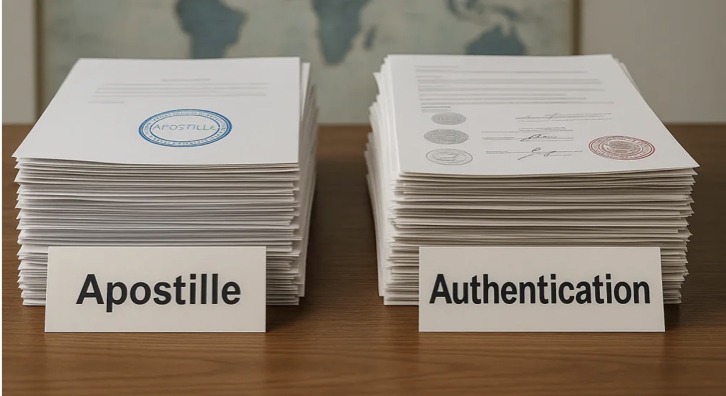
If you are preparing documents for use in another country, you may come across two terms that sound very similar: apostille and authentication. Many people assume they mean the same thing, but they are actually two different methods of verifying documents for international use. Understanding the difference is an important step in preparing your paperwork correctly.
Choosing the wrong process can delay your application and create unnecessary frustration. Whether you are moving abroad, getting married overseas, studying in another country, or expanding your business internationally, this guide will explain the difference between an apostille and authentication in clear, simple language.
What Is an Apostille?
An apostille is a certificate that verifies the authenticity of a public document so it can be accepted in another country. It confirms that the signature, seal, or official who signed the document is recognized by the government authority issuing the apostille.
Apostilles are used only between countries that are members of the Hague Apostille Convention. Because all participating countries have agreed to recognize apostilles, the process is generally simpler and requires fewer steps than authentication. This makes international document acceptance faster and more efficient.
What Is Authentication?
Authentication is another method of verifying documents for international use, but it is typically used when the destination country is not a member of the Hague Apostille Convention. Instead of receiving an apostille, the document goes through a series of verification steps before it can be accepted overseas.
The authentication process often involves multiple government agencies. Depending on the destination country, the document may need to be authenticated by a state or federal government office and then legalized by the country’s embassy or consulate. Because there are additional steps, authentication usually takes more time than obtaining an apostille.
How Do You Know Which One You Need?
The most important factor is the country where your document will be used. If the destination country participates in the Hague Apostille Convention, you will generally need an apostille. If the country is not a member of the convention, authentication is usually required instead.
Before submitting your documents, it is always a good idea to verify the requirements with the organization requesting the paperwork. Universities, employers, immigration offices, and government agencies can usually tell you which type of document verification they require.
Which Documents Can Receive an Apostille or Authentication?
Many of the same documents can go through either process, depending on the destination country. Common examples include birth certificates, marriage certificates, diplomas, FBI background checks, powers of attorney, business documents, and other official records.
The document itself does not usually determine whether you need an apostille or authentication. Instead, the deciding factor is where the document will be used. The same birth certificate might receive an apostille for one country and authentication for another.
Why It Is Important to Choose the Correct Process
Submitting your document through the wrong process can create delays and additional expenses. For example, a country that requires authentication may reject a document that only has an apostille. Likewise, requesting authentication when an apostille is sufficient may add unnecessary time and paperwork.
Taking a few minutes to confirm the correct requirements before beginning the process can save valuable time. This is especially important if you are working toward an immigration deadline, preparing for an overseas job, or planning an international move.
How an Apostille Service Can Help
The difference between apostilles and authentication is not always obvious, especially if this is your first time preparing international documents. Working with an experienced apostille service can help you understand which process applies to your situation before you submit your paperwork.
An apostille professional can review your documents, explain the required steps, and help reduce the risk of delays caused by incorrect submissions. Having knowledgeable guidance allows you to focus on your international plans while feeling confident that your documents are being prepared correctly.
Conclusion
Although apostilles and authentication both verify documents for international use, they are not the same process. An apostille is generally used for countries that participate in the Hague Apostille Convention, while authentication is typically required for countries that are not members. Knowing the difference helps ensure that your documents will be accepted where they are needed.
If you are unsure whether your documents require an apostille or authentication, it is always best to confirm the destination country’s requirements before beginning the process. Whether you are preparing for work, education, marriage, immigration, business, or another international opportunity, Apostille Guy is here to help you navigate the process with confidence and make your global transition as smooth as possible.